

E04Mobility Types
The project examines the infrastructuring of human differentiation in urban road traffic in the context of the mobility transition.
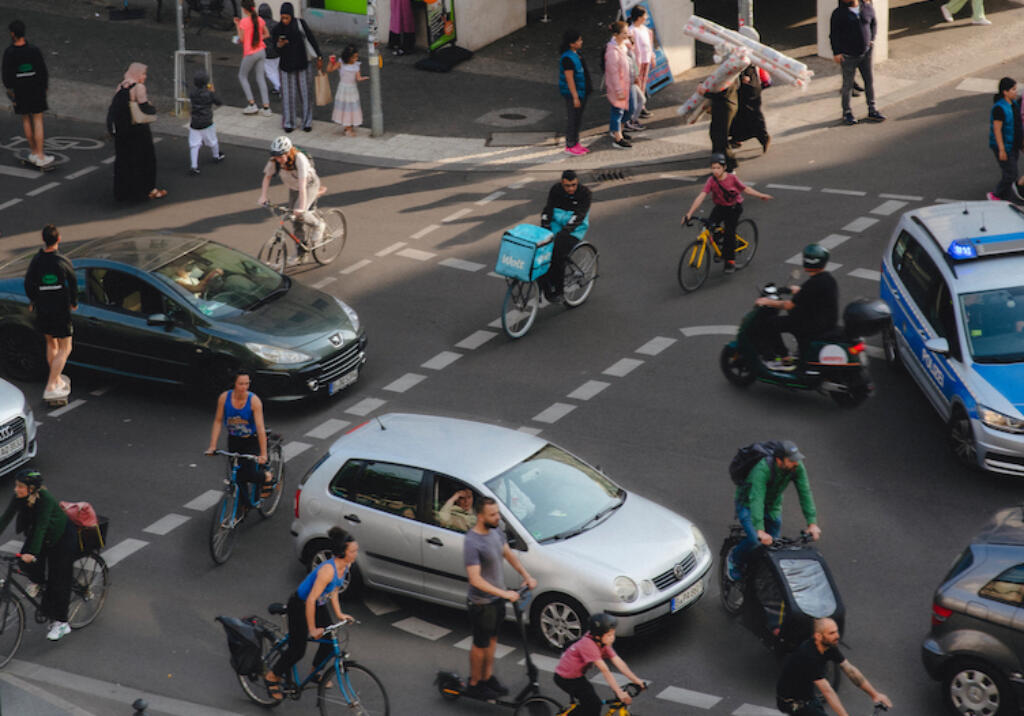
Streets in urban areas are currently undergoing a transformation in favor of sustainable forms of transport. This challenges established cultures of motorized mobility, leading to conflicts between motorists, cyclists, and pedestrians. In cultural perception, the various forms of mobility increasingly represent favored or criticized lifestyles.
How are mobility-based human differentiations infrastructured?
Under what conditions do functional modes of traffic become charged mobility identities?
Based on a cultural infrastructure analysis, the project compares mobility conflicts that arise in various cities (Paris, Berlin, and Montreal) as a result of the mobility transition. It examines (1) the agency of entanglements of people and vehicles, (2) the spatial claims of different mobility groups in terms of distribution politics, (3) the role of narratives, images, and affects in the cultural construction of mobility types, and (4) the coupling of mobility types with other distinctions such as gender, race, class, age, and disability.