

D04Acting as a Profession
Historical Conjunctures of Human Differentiation in Actor Training, Artist Marketing and Theatres in the 20th Century
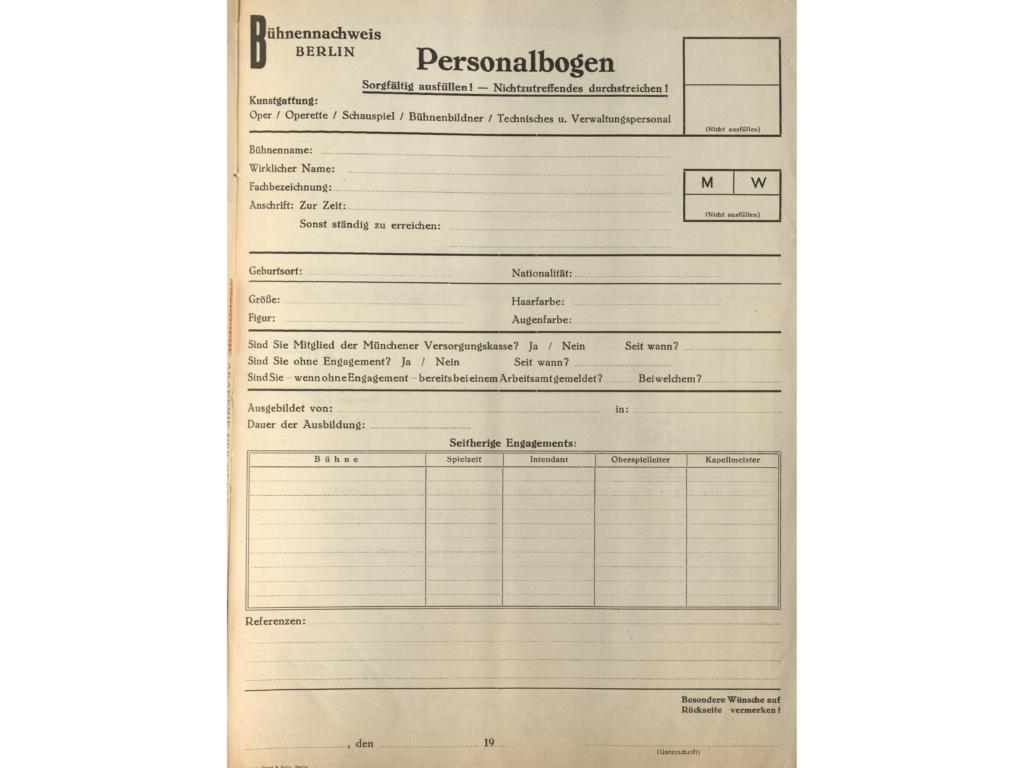
This subproject investigates the significance of human differentiation for the selection and formation of personnel in actor training, artist marketing and theatres during the professionalisation of acting in the 20th century: How are (potential) trainees, career aspirants and actors categorised and sorted (out) in artistic selection processes as well as institutionally formed in professional socialisation processes?
Performance in Interplay with Other Human Differentiations
The analysis focuses on the interplay of performance (in the sense of achievement) or performance capability, differentiations that are ubiquitously relevant to the acting profession – e.g. age, height, voice volume, type and gender – and historically more specific differentiations according to social class, ethnicity/race and nationality. The guiding hypothesis is that the development of the infrastructure relevant to personnel selection and formation in the sense of the emergence of (inter)organizational structures is promoted by historical conjunctures of particular human differentiations.
Comparative Research: (Dis)Continuities and Influences
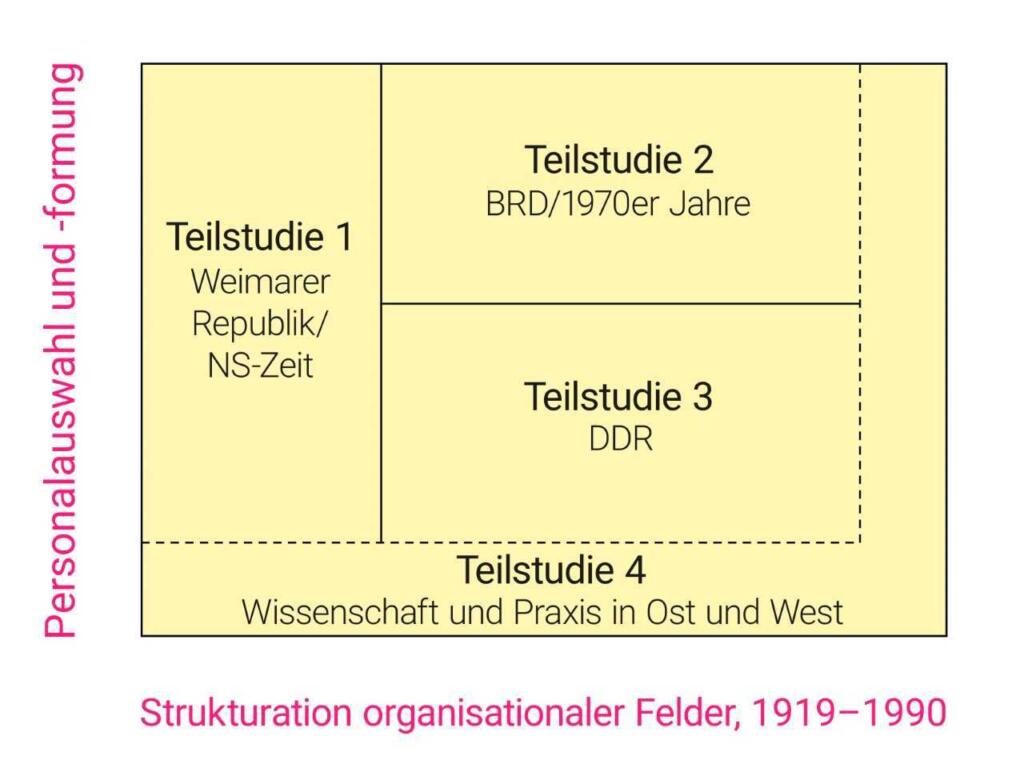
The research design is comparative in nature and divided into four sub-studies. Three of them examine personnel selection and formation in various time periods in the light of shifting political, economic and social conditions: the Weimar Republic and the National Socialist Era (sub-study 1) as well as the divided Germany up to reunification (sub-study 2, sub-study 3). Moreover, another one takes a critical look at the involvement of theatre studies in theatre practice/education in East and West Germany since the beginnings of the discipline in the Weimar Republic (sub-study 4).